


Struggling to maintain energy and focus during your training sessions? You’re not alone. Many athletes and fitness enthusiasts face fatigue that compromises their performance and results. Multi-ingredient pre-workout supplements have surged in popularity as potential solutions, promising enhanced energy, endurance, and strength. This comprehensive guide explains how these supplements work, what ingredients deliver results, and how to choose and use them safely for optimal workout performance. Whether you’re an elite athlete or casual gym-goer, understanding pre-workout supplementation helps you make informed decisions about your fitness strategy.
Table of Contents
- Understanding Pre-Workout Supplements And Their Benefits
- How To Choose The Right Pre-Workout Supplement For Your Needs
- Using Pre-Workout Supplements Effectively And Safely
- Natural Alternatives And Considerations For Casual Gym-Goers
- Explore Elevate Supplements For Your Fitness Journey
- Frequently Asked Questions
Key takeaways
| Point | Details |
|---|---|
| Performance enhancement | Multi-ingredient pre-workouts can boost energy, focus, endurance, and strength during exercise sessions |
| Individual variation | Benefits depend on dosage, formulation, and personal factors including fitness level and health status |
| Natural alternatives | Proper nutrition, hydration, and rest offer comparable benefits for recreational exercisers |
| Protein effectiveness | Protein supplementation significantly increases muscular strength when combined with resistance training |
| Quality matters | Selecting reputable products and understanding correct dosing ensures safety and maximises results |
Understanding pre-workout supplements and their benefits
Pre-workout supplements are specially formulated products designed to enhance your training capacity by boosting energy, focus, and physical performance. These formulations typically combine multiple active ingredients that work synergistically to support different aspects of exercise performance. Multi-ingredient pre-workout supplements may offer physical and cardiovascular benefits such as increased energy, focus, endurance, and strength during exercise.
The most common ingredients serve distinct physiological functions. Caffeine, beta-alanine, creatine, and dietary nitrates form the foundation of most formulations. Caffeine acts as a central nervous system stimulant, enhancing alertness and reducing perceived exertion. Beta-alanine buffers lactic acid accumulation in muscles, delaying fatigue during high-intensity efforts. Creatine phosphate replenishes ATP stores, your muscles’ primary energy currency. Dietary nitrates improve blood flow and oxygen delivery to working muscles.
Research demonstrates measurable performance improvements across various training modalities. Resistance-trained individuals often experience enhanced strength output, whilst endurance athletes may notice improved stamina and reduced time to exhaustion. However, responses vary considerably between individuals based on training status, genetic factors, and baseline fitness levels. Understanding how stacking supplements for peak performance works helps you maximise these benefits.
Cardiovascular effects present both opportunities and considerations. Some users experience beneficial adaptations like improved blood pressure regulation and enhanced vascular function. Others may encounter adverse reactions including elevated heart rate, palpitations, or blood pressure spikes. Individual health status, particularly existing cardiovascular conditions, significantly influences these responses.
Key ingredients and their typical dosages:
- Caffeine: 150-300mg for alertness and energy (equivalent to 1-3 cups of coffee)
- Beta-alanine: 2-5g for fatigue reduction and endurance support
- Creatine monohydrate: 3-5g for ATP production and strength gains
- Citrulline malate: 6-8g for improved blood flow and muscle pumps
- Dietary nitrates: 300-600mg for oxygen efficiency and cardiovascular support
Quality formulations with evidence-based dosages deliver the best results whilst minimising potential side effects. Always verify ingredient transparency and third-party testing when selecting supplements.
The synergy between ingredients often produces greater effects than individual compounds alone. This explains why multi-ingredient formulations typically outperform single-ingredient products in research studies. Cognitive support supplements complement pre-workout formulas by enhancing mental focus during demanding training sessions.
How to choose the right pre-workout supplement for your needs
Selecting an appropriate pre-workout requires careful consideration of your specific training goals, health status, and individual tolerance. Elite athletes pursuing maximum performance have different requirements than recreational exercisers seeking modest energy boosts. The discrepancy in effects may relate to different dosages and populations, highlighting the need for personalised choices.
Your primary training objective should guide ingredient selection. Strength-focused athletes benefit most from creatine-heavy formulations, whilst endurance athletes require beta-alanine and nitrate-rich products. Those seeking improved mental clarity during training should prioritise caffeine and nootropic compounds. Understanding how to choose supplements for performance streamlines this decision-making process.

Ingredient transparency separates quality products from inferior alternatives. Proprietary blends obscure individual ingredient amounts, making it impossible to verify effective dosing or identify potential allergens. Reputable manufacturers list precise quantities for each active compound. Third-party testing certifications from organisations like Informed Sport or NSF Certified for Sport provide additional quality assurance.
Stimulant sensitivity varies dramatically between individuals. Some people metabolise caffeine rapidly and tolerate high doses without issue. Others experience jitters, anxiety, or sleep disruption from modest amounts. Your personal response to coffee or tea provides useful guidance for estimating appropriate caffeine levels in pre-workout supplements.
Health considerations must take priority over performance gains. Individuals with cardiovascular conditions, high blood pressure, anxiety disorders, or caffeine sensitivity should consult healthcare professionals before using stimulant-based supplements. Pregnant or nursing women should avoid most pre-workout formulations. Supplement quality matters significantly for safety and effectiveness.
Steps to select your ideal pre-workout supplement:
- Define your primary training goal (strength, endurance, focus, or combination)
- Assess your caffeine tolerance based on daily coffee or tea consumption
- Review ingredient lists for transparency and evidence-based dosages
- Check for third-party testing certifications ensuring purity and accuracy
- Consider your health status and any contraindications with existing conditions
- Read verified customer reviews focusing on your demographic and goals
- Start with half servings to test individual tolerance before full doses
Multi-ingredient versus single-ingredient supplements present distinct advantages. Multi-ingredient formulas offer convenience and synergistic effects but increase the risk of adverse reactions or ingredient sensitivities. Single-ingredient products provide precise control over dosing and easier identification of problematic compounds if reactions occur.
Pro Tip: Begin with a stimulant-free pre-workout to establish baseline responses to non-caffeine ingredients. This approach helps you isolate which compounds deliver benefits and identify any sensitivities before introducing stimulants.
Using pre-workout supplements effectively and safely
Timing significantly influences pre-workout supplement effectiveness. Most formulations reach peak blood concentration 20-30 minutes after consumption, aligning active ingredient levels with your training start time. Taking supplements too early wastes the performance window, whilst consuming them too late delays benefits until mid-workout.
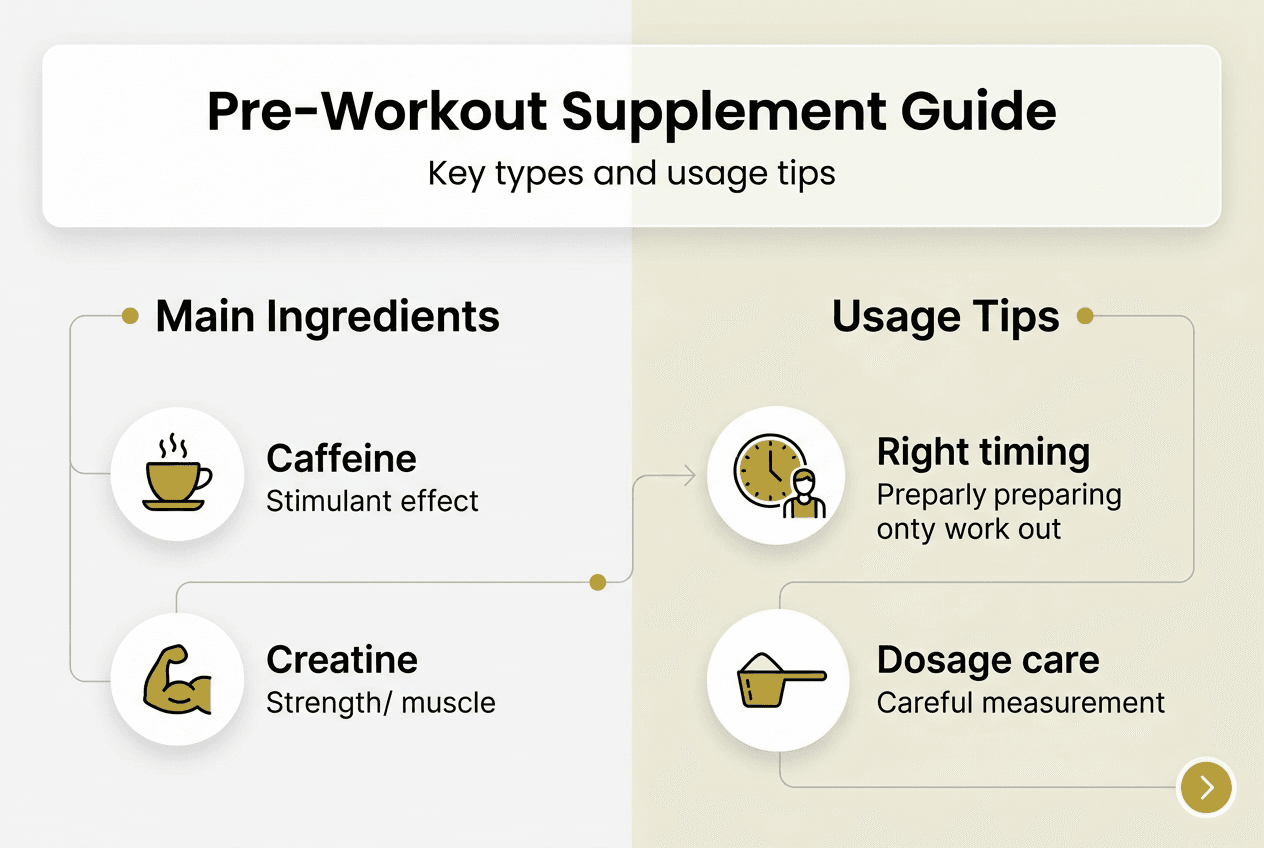
Dosage precision prevents both underwhelming results and adverse reactions. Proper use can improve strength and power output significantly in resistance-trained individuals. Start with half the recommended serving to assess tolerance, then gradually increase to full doses over several sessions. Never exceed suggested amounts, as more doesn’t equal better and increases side effect risk.
Common mistakes undermine supplement effectiveness and safety. Combining multiple caffeine sources like coffee, energy drinks, and pre-workout powder creates excessive stimulant loads. This triggers anxiety, heart palpitations, and potential cardiovascular stress. Inadequate hydration compounds these issues, as many ingredients require proper fluid balance for optimal function.
Timing relative to sleep deserves careful attention. Caffeine’s half-life averages 5-6 hours, meaning afternoon or evening training sessions using stimulant pre-workouts can disrupt sleep quality. Poor sleep recovery negates any performance benefits gained during training. Using supplements for energy safely requires balancing immediate performance with long-term recovery.
Safe usage practices for optimal results:
- Consume pre-workout 20-30 minutes before training for peak ingredient timing
- Drink 400-500ml of water with your supplement to support absorption and hydration
- Avoid taking pre-workouts within 6 hours of bedtime to prevent sleep disruption
- Cycle usage with 1-2 week breaks every 8-12 weeks to maintain sensitivity
- Never combine with other stimulant sources including coffee or energy drinks
- Monitor heart rate and perceived exertion during initial uses
- Discontinue immediately if you experience chest pain, severe headaches, or breathing difficulty
Food intake affects absorption rates and gastrointestinal comfort. Taking pre-workout on an empty stomach accelerates absorption but may cause nausea in sensitive individuals. A light snack 30-45 minutes beforehand provides a buffer whilst still allowing effective absorption. Heavy meals delay and reduce ingredient bioavailability.
Individual response monitoring guides ongoing usage decisions. Track subjective measures like energy levels, focus quality, and workout performance alongside objective metrics including weights lifted, repetitions completed, or running pace. This data reveals whether supplements genuinely enhance your performance or merely create a placebo effect.
Pro Tip: Keep a training log documenting pre-workout usage, dosage, timing, and perceived effects. This record helps you identify optimal protocols and spot any diminishing returns suggesting the need for cycling or dosage adjustments.
Natural alternatives and considerations for casual gym-goers
Scientific evidence suggests pre-workout supplements deliver the most pronounced benefits for elite athletes and serious trainees. For casual gym-goers, benefits of pre-workout supplements may be overstated; simple nutrition and rest offer similar outcomes. Recreational exercisers often achieve comparable performance improvements through lifestyle optimisation without supplementation costs or potential side effects.
The placebo effect plays a substantial role in perceived supplement benefits. Believing a product will enhance performance often produces measurable improvements regardless of active ingredients. Research demonstrates that expectation and ritual surrounding supplement consumption can boost motivation, effort, and subjective performance ratings. This doesn’t invalidate genuine physiological effects but highlights the importance of realistic expectations.
Natural strategies provide effective alternatives for casual exercisers. Adequate sleep remains the most powerful performance enhancer, with 7-9 hours nightly supporting hormonal balance, muscle recovery, and cognitive function. Proper hydration maintains blood volume and thermoregulation. Strategic pre-workout nutrition delivers readily available energy without supplement expense.
| Strategy | Pre-workout supplements | Natural approaches |
|---|---|---|
| Energy source | Caffeine and stimulants | Quality sleep and balanced meals |
| Timing | 20-30 minutes pre-training | Consistent daily habits |
| Cost | £25-50 monthly | Minimal additional expense |
| Side effects | Potential jitters, sleep disruption | Virtually none when balanced |
| Effectiveness | Moderate to high for athletes | Comparable for casual users |
| Sustainability | Requires cycling breaks | Sustainable indefinitely |
Natural performance enhancement strategies:
- Prioritise 7-9 hours of quality sleep nightly for optimal recovery and energy
- Consume a balanced meal 2-3 hours before training with carbohydrates and protein
- Have a light snack 30-45 minutes pre-workout like a banana with nut butter
- Maintain consistent hydration throughout the day, not just during training
- Time your largest meals around training windows for maximum energy availability
- Manage stress through meditation, breathing exercises, or leisure activities
- Establish consistent training schedules that align with your natural energy patterns
Appropriate supplement use depends on training intensity and performance goals. Competitive athletes preparing for events may benefit from the marginal gains supplements provide. Casual exercisers training 3-4 times weekly for general fitness rarely require supplementation beyond basic protein and micronutrients. Essential supplements for beginners focus on foundational nutrition rather than performance enhancers.
Cost-benefit analysis favours natural approaches for many individuals. Quality pre-workout supplements cost £25-50 monthly, whilst improved sleep and nutrition require minimal financial investment. The time and effort spent researching, purchasing, and timing supplement consumption might yield better returns when invested in sleep hygiene or meal preparation.
Exceptional circumstances justify supplement consideration for casual users. Shift workers struggling with inconsistent sleep schedules may benefit from strategic caffeine use. Individuals with demanding schedules limiting meal timing might find convenience in quick-absorbing supplements. Those experiencing genuine training plateaus despite optimised lifestyle factors could experiment with evidence-based formulations.
Explore Elevate Supplements for your fitness journey
Ready to take your training to the next level with trusted, quality formulations? Elevate Supplements offers scientifically-backed supplement stacks designed specifically for athletes and fitness enthusiasts pursuing peak performance and optimal recovery. Our carefully curated products combine evidence-based ingredients at effective dosages, supporting your goals whether you’re building strength, enhancing endurance, or improving overall wellness.
Our perform and recovery stack delivers comprehensive support for demanding training cycles, combining pre-workout energy with post-training recovery nutrients. The fuel and utilization stack optimises nutrient timing and absorption for maximum performance gains. Every product features transparent labelling, third-party testing, and formulations backed by scientific research.
Achieve your fitness goals safely and effectively with supplements you can trust. Explore our complete range at Elevate Supplements and discover why thousands of athletes choose quality formulations for their performance needs.
Frequently asked questions
What are pre-workout supplements?
Pre-workout supplements are formulated products taken before exercise to enhance energy, focus, and endurance during training sessions. They typically contain ingredients like caffeine for alertness, creatine for strength, beta-alanine for fatigue reduction, and nitrates for improved blood flow. These compounds work together to support various aspects of physical performance.
Are pre-workout supplements safe to use?
Pre-workout supplements are generally safe when used as directed by healthy individuals without underlying health conditions. However, effects vary considerably based on personal health status, particularly cardiovascular function and stimulant sensitivity. People with heart conditions, high blood pressure, or anxiety should consult healthcare professionals before use. Starting with lower doses helps assess individual tolerance safely.
Do pre-workout supplements work for casual gym-goers?
Benefits for casual exercisers are often minimal compared to elite athletes who train at higher intensities. Research suggests recreational gym-goers may achieve similar performance improvements through proper sleep, nutrition, and hydration without supplementation. The placebo effect also contributes significantly to perceived benefits in less experienced trainees.
What are the main ingredients in pre-workout supplements?
Common ingredients include caffeine (150-300mg) for energy and alertness, creatine (3-5g) for strength and power output, beta-alanine (2-5g) for endurance and fatigue reduction, and dietary nitrates (300-600mg) for improved blood flow. Many formulations also contain citrulline malate for muscle pumps and various B vitamins for energy metabolism. Each ingredient targets different performance aspects to create synergistic effects.
How should I use pre-workout supplements for best results?
Consume your pre-workout 20-30 minutes before training to align peak ingredient levels with your session start. Begin with half the recommended dose to assess tolerance before progressing to full servings. Stay well hydrated by drinking 400-500ml of water with your supplement. Avoid taking pre-workouts within 6 hours of bedtime to prevent sleep disruption, and never combine with other caffeine sources like coffee or energy drinks.
Recommended
- How to Choose Supplements for Peak Performance Results – ElevateSupplements
- Why choose premium supplements for peak fitness in 2026 – ElevateSupplements
- Why supplement quality matters for athletes in 2026 – ElevateSupplements
- Why cycle supplements for performance and recovery in 2026 – ElevateSupplements


